Memory, Aging, and the Lingering 'Anyways'
26 March 2024 - 17 mins974. How does aging affect our ability to understand language? From the challenges of processing complex sentences to the resilience you get from a rich vocabulary, we look at how our language skills change over time. Plus, looking into why people say "anyways" led me to some interesting historical tidbits.
The aging segment was written by Valerie Fridland, a professor of linguistics at the University of Nevada in Reno and the author of "Like, Literally, Dude: Arguing for the Good in Bad English." A version of the piece originally appeared on Psychology Today, and you can find her at valeriefridland.com.
| Edited transcript with links: https://grammar-girl.simplecast.com/episodes/aging-an...
Series Episodes


Min-maxxing, looksmaxxing, and Nixon-maxxing, with Roger Kreuz
1221. This week, we talk to Roger Kreuz, associate dean at the University of Memphis, about the "maxxing" craze. We look at how it started with min-maxxing in 1990s gaming culture, how looksmaxxing spread from the manosphere, and why it isn't quite a suffix. Then we look at what that second X is doing, why "Nixon-maxxing" might be peak maxxing, and why a brand picking up your slang usually kills it. Find Daniel and Chris on LinkedIn, and more about their projects at Perfectit.com. Save the date for Grammarpalooza — The Game Show: Thursday, September 24 at 5 p.m. PT / 8 p.m. ET. A hearty thank-you to our Keepers of the Commas and one Immortal on Patreon. We appreciate your support! Larry RosenblumMahala RussellGeorge WilsonLaurel PaulLinda CoxBirna Anna BjörnsdóttirMarlen Ruiz 🔗 Join the Grammar Girl Patreon. 🔗 Share your familect recording in Speakpipe or by leaving a voicemail at 833-214-GIRL (833-214-4475) 🔗 Watch my LinkedIn Learning writing courses. 🔗 Subscribe to the newsletter. 🔗 Find an edited transcript. 🔗 Get Grammar Girl books. | HOST: Mignon Fogarty | Grammar Girl is part of the Quick and Dirty Tips podcast network. Audio Engineer: Dan FeierabendDirector of Podcast: Holly HutchingsCreative Partnerships & Business Development: Morgan ChristiansonMarketing and Video: Nat Hoopes, Rebekah SebastianPodcast Associate: Maram Elnagheeb| Theme music by Catherine Rannus. | Grammar Girl Social Media: YouTube. TikTok. Facebook. Threads. Instagram. LinkedIn. Mastodon. Bluesky. Hosted on Acast. See acast.com/privacy for more information.
17 mins
17 September Finished
Why do pirates say 'Arr'? Is it 'none is' or 'none are'?
1220. This week, in honor of Talk Like a Pirate Day, we look at the history of eight pirate words, and then we look at whether the right pairing is "none is" or "none are." Save the date for Grammarpalooza — The Game Show: Thursday, September 24 at 5 p.m. PT / 8 p.m. ET. A hearty thank-you to our Keepers of the Commas and one Immortal on Patreon. We appreciate your support! Larry RosenblumMahala RussellGeorge WilsonLaurel PaulLinda CoxBirna Anna BjörnsdóttirMarlen Ruiz 🔗 Share your familect recording in Speakpipe or by leaving a voicemail at 833-214-GIRL (833-214-4475) 🔗 Watch my LinkedIn Learning writing courses. 🔗 Subscribe to the newsletter. 🔗 Find an edited transcript. 🔗 Get Grammar Girl books. | HOST: Mignon Fogarty | Grammar Girl is part of the Quick and Dirty Tips podcast network. Audio Engineer: Castria CommunicationsDirector of Podcast: Holly HutchingsAdvertising Operations Specialist: Morgan ChristiansonMarketing and Video: Nat Hoopes, Rebekah SebastianPodcast Associate: Maram Elnagheeb| Theme music by Catherine Rannus. | Grammar Girl Social Media: YouTube. TikTok. Facebook. Threads. Instagram. LinkedIn. Mastodon. Bluesky. Hosted on Acast. See acast.com/privacy for more information.
12 mins
15 September Finished

Stray Russian words and made-up style rules, with Daniel Heuman and Chris Ryder
1219. This week, we talk to Daniel Heuman and Chris Ryder from Intelligent Editing about the errors hiding in AI writing that looks flawless. We look at why it invents its own rules when you ask for Chicago or AP style, why it goes wrong in the middle of a document rather than at the ends, and why an AI that over-edits is harder to clean up than one that under-edits. Find Daniel and Chris on LinkedIn, and more about their projects at Perfectit.com. Save the date for Grammarpalooza — The Game Show: Thursday, September 24 at 5 p.m. PT / 8 p.m. ET. A hearty thank-you to our Keepers of the Commas and one Immortal on Patreon. We appreciate your support! Larry RosenblumMahala RussellGeorge WilsonLaurel PaulLinda CoxBirna Anna BjörnsdóttirMarlen Ruiz 🔗 Join the Grammar Girl Patreon. 🔗 Share your familect recording in Speakpipe or by leaving a voicemail at 833-214-GIRL (833-214-4475) 🔗 Watch my LinkedIn Learning writing courses. 🔗 Subscribe to the newsletter. 🔗 Find an edited transcript. 🔗 Get Grammar Girl books. | HOST: Mignon Fogarty | Grammar Girl is part of the Quick and Dirty Tips podcast network. Audio Engineer: Dan FeierabendDirector of Podcast: Holly HutchingsCreative Partnerships & Business Development: Morgan ChristiansonMarketing and Video: Nat Hoopes, Rebekah SebastianPodcast Associate: Maram Elnagheeb | Theme music by Catherine Rannus. | Grammar Girl Social Media: YouTube. TikTok. Facebook. Threads. Instagram. LinkedIn. Mastodon. Bluesky. Hosted on Acast. See acast.com/privacy for more information.
24 mins
10 September Finished
Who's a good boy? The science behind 'dog voice.' Is it 'bated breath' or 'baited breath'?
1218. This week, we look at "dog-directed speech" — the high-pitched, sing-songy register people love to use with dogs — and what the research says about whether dogs actually like it. Then we look at why it's "bated breath" and not "baited breath," and how Shakespeare used the phrase in "The Merchant of Venice." Plus, we have a familect about "spicy water." The dog segment was by Karen Lunde, a career writer and editor. She writes I'll Go First, a newsletter where she shares her story, and then hands you a writing prompt and a metaphorical pen. Find her at igofirst.org. Save the date for Grammarpalooza — The Game Show: Thursday, September 24 at 5 p.m. PT / 8 p.m. ET. A hearty thank-you to our Keepers of the Commas and one Immortal on Patreon. We appreciate your support! Larry RosenblumMahala RussellGeorge WilsonLaurel PaulLinda CoxBirna Anna BjörnsdóttirMarlen Ruiz 🔗 Share your familect recording in Speakpipe or by leaving a voicemail at 833-214-GIRL (833-214-4475) 🔗 Watch my LinkedIn Learning writing courses. 🔗 Subscribe to the newsletter. 🔗 Find an edited transcript. 🔗 Get Grammar Girl books. | HOST: Mignon Fogarty | Grammar Girl is part of the Quick and Dirty Tips podcast network. Audio Engineer: Castria CommunicationsDirector of Podcast: Holly HutchingsAdvertising Operations Specialist: Morgan ChristiansonMarketing and Video: Nat Hoopes, Rebekah SebastianPodcast Associate: Maram Elnagheeb| Theme music by Catherine Rannus. | Grammar Girl Social Media: YouTube. TikTok. Facebook. Threads. Instagram. LinkedIn. Mastodon. Bluesky. Hosted on Acast. See acast.com/privacy for more information.
11 mins
8 September Finished
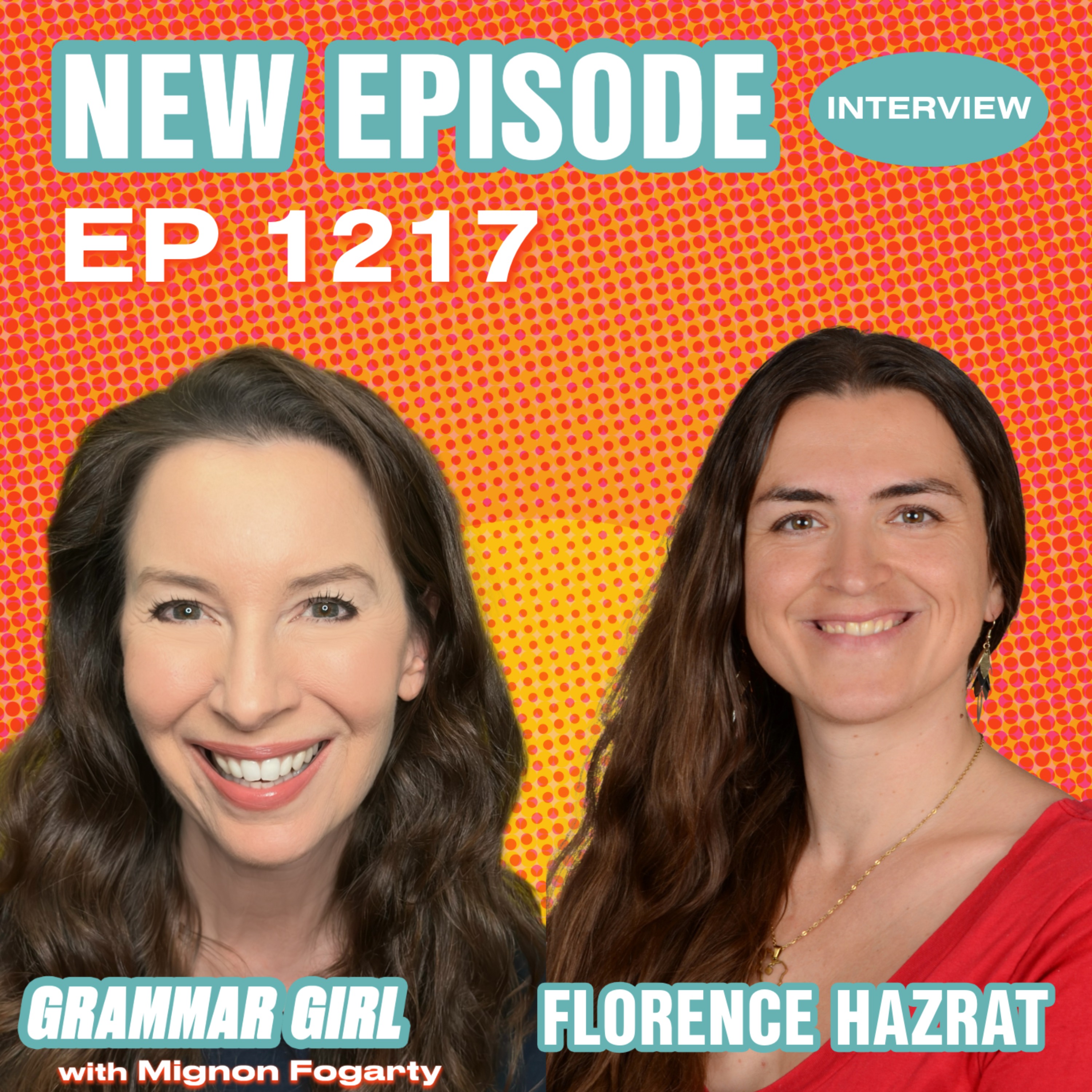
How we got from no spaces between words to the interrobang, with Florence Hazrat
1217. This week, we talk to Florence Hazrat, author of "On the Mark," about how punctuation evolved over 2,000 years. We look at why ancient Greek and Roman writing had no spaces between words, how a librarian in Alexandria introduced the first marks to help readers, and why the Renaissance brought a burst of new punctuation that then mostly stopped. Then we look at why a period can make a short text message feel aggressive, whether emoji count as punctuation, and how failed inventions like the interrobang tried to join the ranks. Find Florence Hazrat on Instagram or her website. A hearty thank-you to our Keepers of the Commas on Patreon. We appreciate your support! Larry RosenblumMahala RussellGeorge WilsonLaurel PaulLinda CoxBirna Anna Björnsdóttir 🔗 Join the Grammar Girl Patreon. 🔗 Share your familect recording in Speakpipe or by leaving a voicemail at 833-214-GIRL (833-214-4475) 🔗 Watch my LinkedIn Learning writing courses. 🔗 Subscribe to the newsletter. 🔗 Find an edited transcript. 🔗 Get Grammar Girl books. | HOST: Mignon Fogarty | Grammar Girl is part of the Quick and Dirty Tips podcast network. Audio Engineer: Dan FeierabendDirector of Podcast: Holly HutchingsCreative Partnerships & Business Development: Morgan ChristiansonMarketing and Video: Nat Hoopes, Rebekah SebastianPodcast Associate: Maram Elnagheeb| Theme music by Catherine Rannus. | Grammar Girl Social Media: YouTube. TikTok. Facebook. Threads. Instagram. LinkedIn. Mastodon. Bluesky. Hosted on Acast. See acast.com/privacy for more information.
27 mins
3 September Finished
Why do so many last names sound like jobs?
1216. In honor of Labor Day, we look at occupational surnames — why Baker, Cooper, and Fletcher sound like jobs, and why Wainwright, Chandler, and Fuller were jobs too, even though they don't sound like it anymore. We also look at how names like Webster and Baxter preserve an Old English suffix for women's work. The jobs segment was by Karen Lunde, a career writer and editor. She writes I'll Go First, a newsletter where she shares her story, and then hands you a writing prompt and a metaphorical pen. Find her at igofirst.org. Save the date for Grammarpalooza — The Game Show: Thursday, September 24 at 5 p.m. PT / 8 p.m. ET. A hearty thank-you to our Keepers of the Commas on Patreon. We appreciate your support! Larry RosenblumMahala RussellGeorge WilsonLaurel PaulLinda CoxBirna Anna Björnsdóttir 🔗 Join the Grammar Girl Patreon. 🔗 Share your familect recording in Speakpipe or by leaving a voicemail at 833-214-GIRL (833-214-4475) 🔗 Watch my LinkedIn Learning writing courses. 🔗 Subscribe to the newsletter. 🔗 Find an edited transcript. 🔗 Get Grammar Girl books. | HOST: Mignon Fogarty | Grammar Girl is part of the Quick and Dirty Tips podcast network. Audio Engineer: Castria CommunicationsDirector of Podcast: Holly HutchingsCreative Partnerships & Business Development: Morgan ChristiansonMarketing and Video: Nat Hoopes, Rebekah SebastianPodcast Associate: Maram Elnagheeb| Theme music by Catherine Rannus. | Grammar Girl Social Media: YouTube. TikTok. Facebook. Threads. Instagram. LinkedIn. Mastodon. Bluesky. Hosted on Acast. See acast.com/privacy for more information.
9 mins
1 September Finished