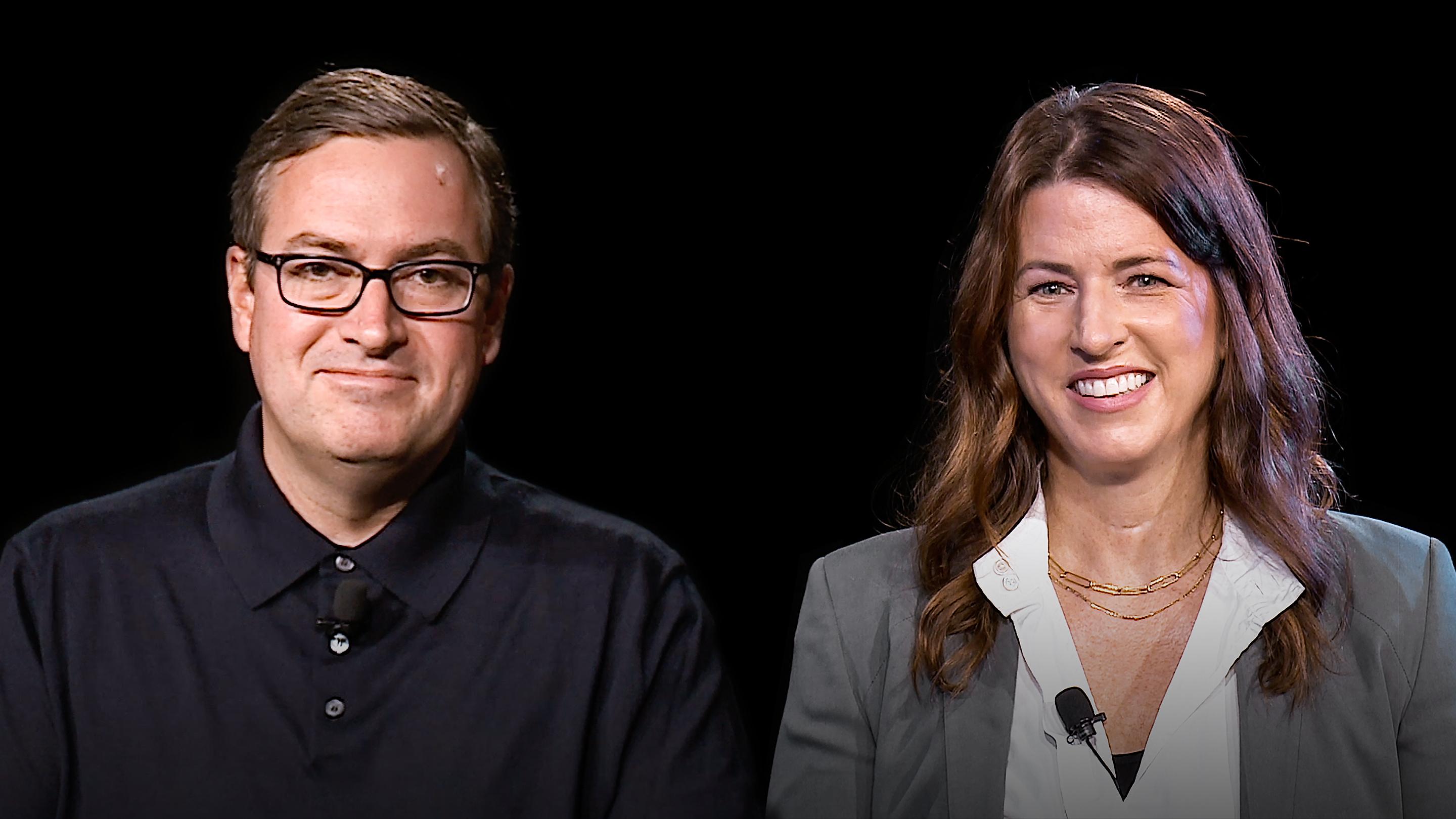

Amazon's climate pledge to be net-zero by 2040 | Dave Clark and Kara Hurst
19 October 2020 - 5 minsIn 2019, Amazon signed the Climate Pledge, a commitment to become a net-zero carbon business by 2040. Dave Clark, Amazon's chief of consumer retail, and Kara Hurst, head of the company's sustainability efforts, sit down with entrepreneur and activist Lindsay Levin to discuss how the company is planning to reduce its carbon footprint across all aspects of business -- while inviting other companies to join them in this transformation.
Series Episodes


How video games can power up your parenting | Hannah Boquet (re-release)
Parenting an eye-rolling teenager glued to a gaming system is not a simple feat, but what if you could turn screen time into an opportunity for connection? Hannah Boquet shares how she decided to play video games with her kids and discovered the power of esports to foster trust, communication and essential life skills. Dive deeper into how you can strengthen family bonds, support your child’s development — and maybe even be considered “cool” by your kid. (This episode originally aired in 2025.) Hosted on Acast. See acast.com/privacy for more information.
17 mins
27 October Finished
Unions for climate action! | Payton M. Wilkins (re-release)
In the long term, shutting down a coal mine means cleaner air and a healthier environment — but in the short term, it can devastate a community or family that relied on the mine's paychecks to make ends meet. Environmental justice advocate Payton M. Wilkins thinks we can protect both workers and the planet with an age-old solution: unions. He digs into the economic fallout of ditching fossil fuels and shows why unions are well-positioned to push the transition to clean energy and green jobs. (This episode originally aired in 2024.) Hosted on Acast. See acast.com/privacy for more information.
12 mins
26 October Finished
Sunday Pick: Unlocking Your Power at Work: Kara Swisher on how to get what you want | from Fixable
No matter where you fall on the corporate food chain, you have power at work—you just might not know how to use it. In this new series on Unlocking Your Power at Work, Anne and Frances dig into how to discover, build, and use your power, explore common power dynamics in the workplace, and learn from people who use their full power with honesty and swagger. Kara Swisher is one of the most influential voices in media and has built a career holding the powerful accountable. In this episode, she reflects with Anne and Frances on her own path to power and what she’s learned from watching some people become corrupted by power while others learn to wield it for good. She also argues that people don’t leave jobs early or often enough, and makes the case for pursuing more than just the opportunities that are offered to you. Hosted on Acast. See acast.com/privacy for more information.
35 mins
25 October Finished
The pursuit of happiness requires free time | Danielle Roberts
Do you feel short on time? Writer and work expert Danielle Roberts would like to help you with that. In this quick talk, she makes the case that free time isn't a reward you earn but a civil right you're owed. Hosted on Acast. See acast.com/privacy for more information.
32 mins
24 October Finished
Can you spot the lies in your news feed? | Laura Smythe
Laura Smythe spent years in legacy newsrooms, and she thinks the habits journalists use to vet information should belong to all of us. Using Fyre Festival as a cautionary tale, she explains why media literacy is a vital skill in our age of deepfakes and algorithmic feeds — and describes the country that’s already found a way to start teaching it in elementary school. Hosted on Acast. See acast.com/privacy for more information.
14 mins
23 October Finished
I can't speak. Here's how I get people to listen | Jessica Irwin
Jessica Irwin is many things: a photographer, artist, author, performer. She also happens to be nonverbal, born with cerebral palsy that affects the muscles she needs to talk. Speaking through a device that turns her typed words into speech, she gives a sharp, funny and urgent reminder that being unable to speak has nothing to do with intelligence — and shares a few easy ways anyone can better communicate with nonverbal people. Hosted on Acast. See acast.com/privacy for more information.
9 mins
22 October Finished